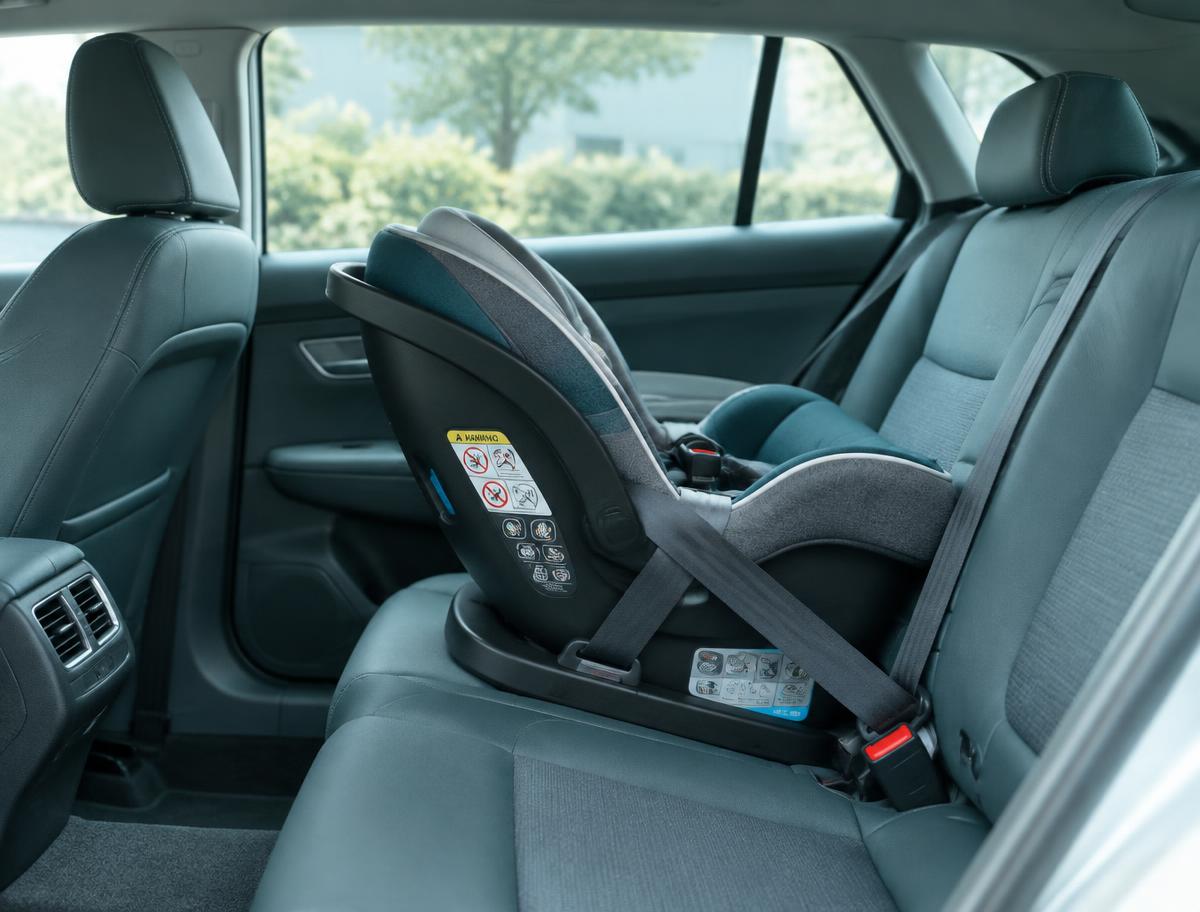
Children need a restraint that matches their age, weight, and height. Always follow the car seat and vehicle manuals.
- Rear-facing seats keep infants and toddlers best supported. Keep children rear-facing as long as the seat allows.
- Forward-facing seats with a harness come next, followed by a belt-positioning booster.
- Children are generally safest in the back seat. Never place a rear-facing seat in front of an active airbag.
- Many local fire stations and community programs offer free car seat installation checks.
A quick check before each drive catches the most common mistakes.
- The installed seat should move less than one inch side to side at the belt path.
- Harness straps should pass the pinch test at the shoulder: you cannot pinch extra webbing.
- Place the chest clip at armpit level.
- Remove bulky coats before buckling, then add a blanket over the harness.
Age alone is not the answer. Fit is what matters.
- Their back rests against the seat with knees bending at the edge.
- The lap belt stays on the upper thighs, not the stomach.
- The shoulder belt crosses the chest and shoulder, not the neck.
- They can stay seated this way for the whole trip.